
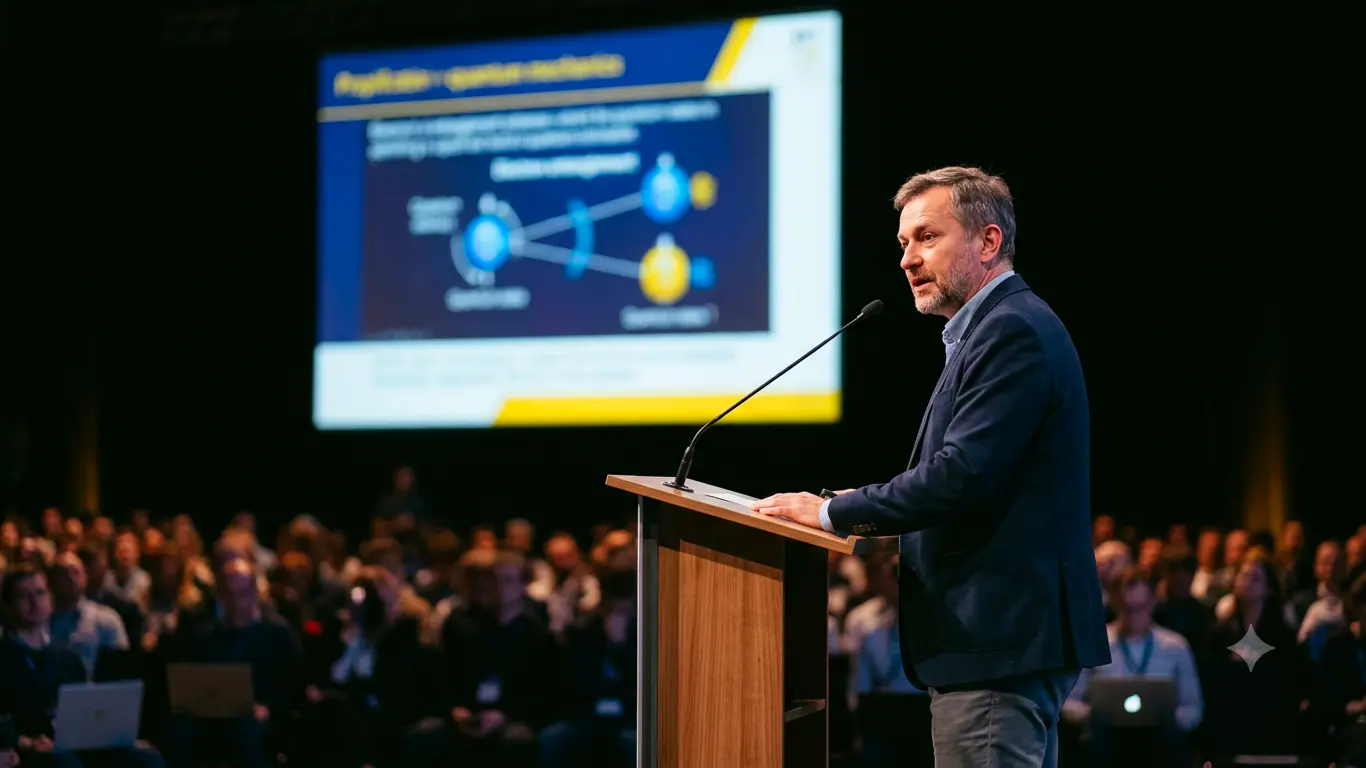
The demand for computational power generated by the development of generative artificial intelligence is growing exponentially, pushing classical von Neumann architecture to the limits of energy efficiency. The future of sustainable computing lies in drawing direct inspiration from the human brain.
During this exclusive on-site seminar, Prof. Marek Nowak from the Polish Academy of Sciences will introduce the world of neuromorphic engineering. We will focus on hardware implementations of Spiking Neural Networks (SNNs) and In-Memory Computing architectures. However, the most fascinating part of the meeting will be the discussion on the potential of hybridization: how neuromorphic coprocessors can act as ultra-efficient I/O systems for quantum processors, filtering and compressing classical data before its translation into quantum states.
Seminar Agenda:
- 12:00 – 12:20: The twilight of Moore’s Law and the energy burdens of modern AI.
- 12:20 – 13:00: Introduction to neuromorphic hardware: From memristors to SNN architecture.
- 13:00 – 13:40: The perfect synergy: Utilizing neuromorphic coprocessors in the control loop of NISQ systems.
- 13:40 – 14:15: Q&A from the audience and networking.
Target Audience: We especially welcome hardware engineers, IC designers, researchers focused on energy-efficient artificial intelligence, and all enthusiasts of unconventional computing architectures.