
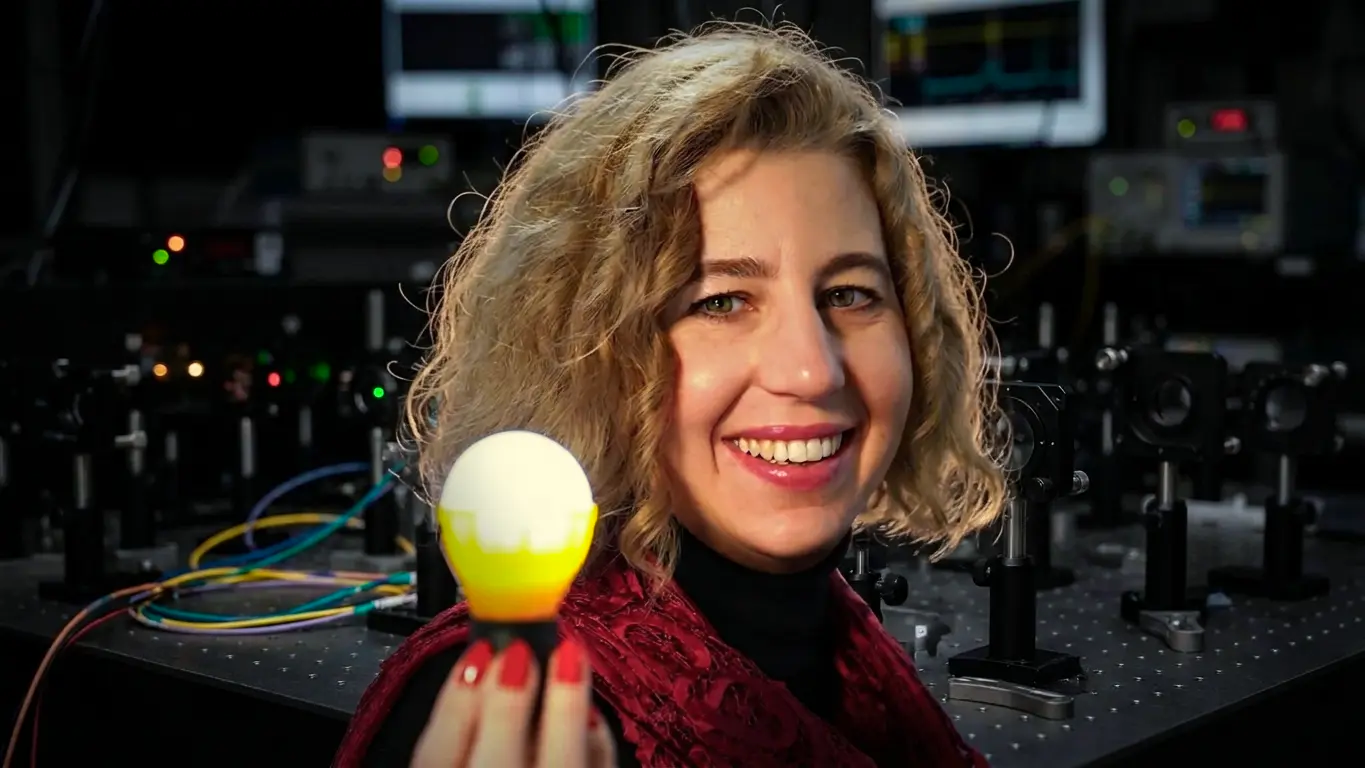
After months of intensive organizational preparations, the Center for Hybrid Quantum-Classical Information Technologies (QLAB) is entering a decisive operational phase. Since March of this year, according to the project schedule, the research teams have been officially led by Prof. Magdalena Stobińska-Moretto, an outstanding specialist in the field of quantum information processing and an Alexander von Humboldt fellow. Her joining the Faculty of Physics at the University of Warsaw marks the beginning of a new chapter in academic cooperation, bridging the Polish and international scientific ecosystems (including close collaboration with Sorbonne University).
Investment in World-Class Research Infrastructure
Building a bridge between abstract theory and scalable market applications—which is crucial to QLAB’s mission—requires world-class equipment. The process of expanding the resources of the Faculty of Physics has just begun, including the dedicated Quantum Imaging Laboratory and the Quantum Photonics Laboratory. These investments are made possible by a historic grant of 30 million PLN from the European Funds for a Modern Economy (FENG) program.
What Does This Mean in Practice?
The purchase of specialized equipment will enable advanced research and development work focused on building hybrid interfaces (connecting quantum systems with classical ICT networks) and testing solutions in an application environment. Increased measurement capabilities will accelerate, among other things:
- Testing innovative photonic networks for telecommunications and defense,
- Developing metrological solutions dedicated to modern medicine,
- Implementing the “innovation loop”—verifying the commercialization and patenting potential of new technological solutions.
“We are building a strong, internationally recognized center at the University of Warsaw, which is why our goal goes beyond just conducting research. We want these highly modern laboratories to be a space from which ready-made prototypes will reach the market,” emphasizes Prof. Stobińska-Moretto, highlighting the center’s overarching objective: strengthening European technological sovereignty in strategic deep-tech areas.